Home /Academics/

Best M.Sc Biotechnology Course in Jaipur

image

Best M.Sc Biotechnology Course

Format

Full Time

Opt-in Residential

Commencement Date

July 2026

Eligibility

B.Sc. Degree

(Pass course or Hons.)

Duration

2 years

Including 1 Year Industry Training
Apply Now arrow arrow
  • MSc Biotechnology Program

    Enroll in a Leading M.Sc Biotechnology College

    At Dr. B. Lal Institute of Biotechnology (BIBT), students enrolling in a leading M.Sc Biotechnology college in Jaipur, Rajasthan gain access to one of the best M.Sc Biotechnology courses, designed to build strong scientific foundations and advanced research capabilities. This career-focused biotechnology degree equips learners with in-depth theoretical knowledge, practical laboratory experience, and industry-oriented skills needed to drive innovation in healthcare, pharmaceuticals, and life sciences. The program promotes academic excellence while preparing students for leadership roles, advanced research opportunities, and strong placement support, helping them transition confidently into successful careers or pursue higher studies such as a PhD.

Top Features of Dr. B. Lal Institute of Biotechnology's M.Sc Biotechnology Course

Explore the key features of our Master’s program designed to combine advanced learning, practical training, and industry exposure:

World Class Faculty
Learning Core Principles and Techniques

Advancing students' knowledge of the fundamental principles and techniques of biotechnology.
State of the Art Laboratories & Instrumentation
Specialised Areas of Biotechnology

Providing in-depth training in specialized areas of biotechnology, such as genomics, proteomics, and bioinformatics.

Active Career Development Cell
Research Skill Development

Developing research skills, including experimental design, data analysis, and presentation of results.
Consistent Academic Records
Preparing for Careers in Biotechnology

Preparing students for careers in biotechnology research and development, as well as in related fields such as pharmaceuticals, agriculture, and medical devices.

Strong Research Foundation
Research Communication and Collaborative Practice

Enhancing students' communication and collaboration skills to enable effective teamwork and presentation of research findings.

Strong Brand Values & Alumni Network
Commitment to Continuous Learning

Encouraging a lifelong commitment to learning and professional development.

M. Sc. Biotechnology Career Opportunities & Placement

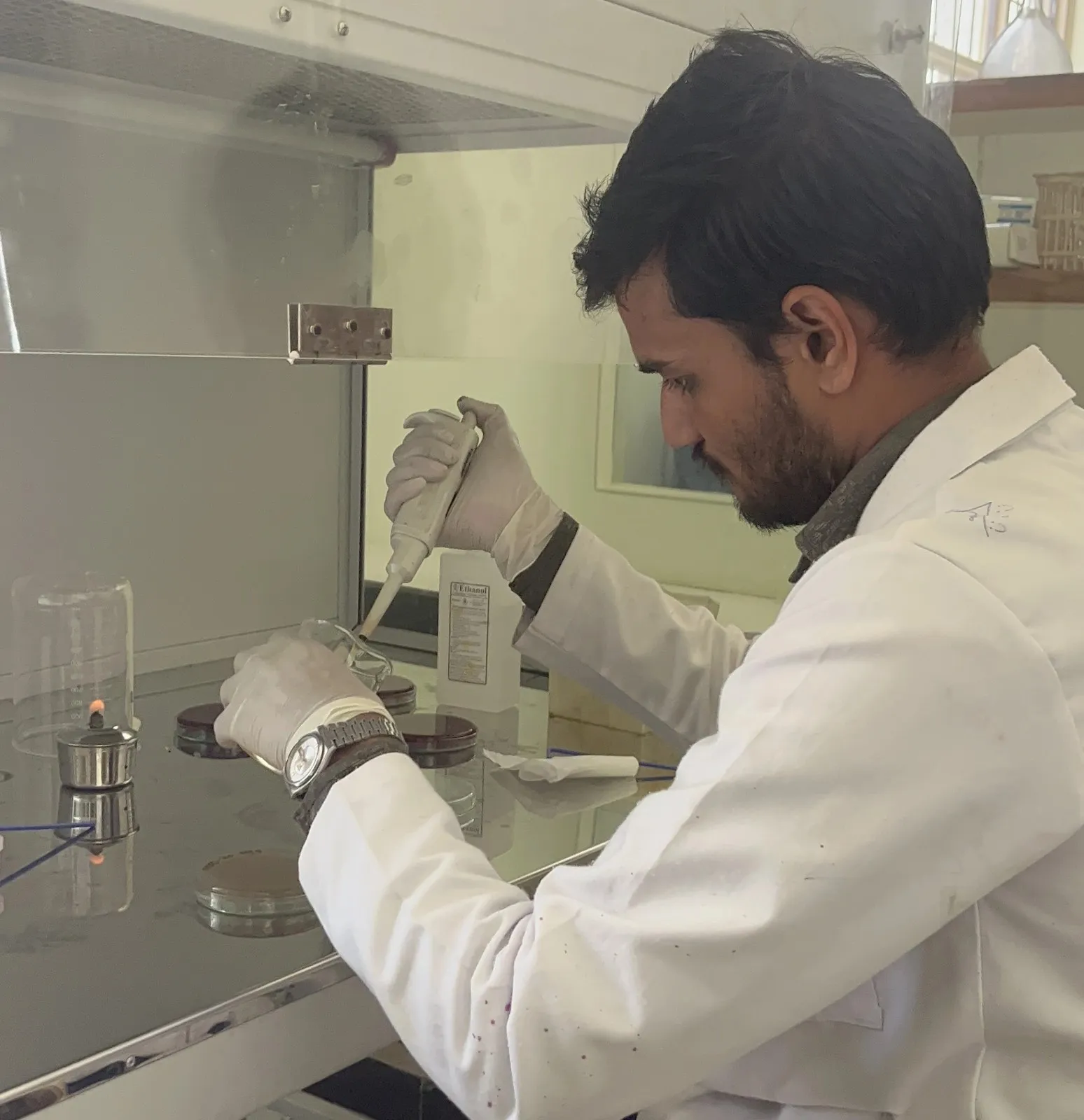
Graduates with a Master's degree in Biotechnology can pursue a variety of career paths, including:

Glimpse

Biotechnology researcher: Conduct independent research in areas such as genomics, proteomics, and bioinformatics to develop new treatments and therapies.

Glimpse

Biotech project manager: Plan and manage biotechnology projects, including research and development, product development, and production.

Glimpse

Biotech product development specialist: Lead the development and commercialization of new biotechnology products, such as drugs, medical devices, and diagnostic tests.

Glimpse

Biotech regulatory affairs specialist: Navigate complex regulatory requirements and obtain approval for new biotechnology products.

Glimpse

Biotech patent attorney: Assist biotechnology companies in protecting their intellectual property through patents and other legal mechanisms.

Glimpse

Biotech entrepreneur: Start and manage a biotechnology company, developing new products and services in the industry.

Glimpse

Biotech consultant: Provide expert advice to biotechnology companies and government agencies on a range of issues, including research and development, product development, and regulatory compliance.

In addition to these specific roles, biotechnology graduates can also find opportunities in related fields such as pharmaceuticals, environmental science, and food science. They can also continue their education with a PhD to further advance their careers.

M. Sc. Biotechnology Course Curriculum
01

Semester

  • Cell Biology
  • Genetics
  • Microbiology
  • Analytical Techniques
  • Bioprocess Engineering
  • Gen. Biotechnology Lab (Core)
  • Lab based on electives (Analytical Techniques)
  • Lab based on electives -(Bioprocess Engineering)
02

Semester

  • Molecular Biology
  • Virology & Immunology
  • Biological Macromolecules & Enzymology
  • Bioinformatics & Biostatistics
  • Industrial Biotechnology & Biosafety
  • Biodiversity, Ecology & Evolution
  • General Practical Lab
  • Lab based on Elective - Bioinformatics & Biostatistics
  • Lab based on elective - Industrial Biotechnology & Biosafety
  • Lab based on elective - Biodiversity, Ecology & Evolution
03

Semester

  • Genetic Engineering
  • Animal Biotechnology
  • Entrepreneurship & Ethics
  • Protein engineering
  • Proteomics & Genomics
  • Seminar, Scientific Writing and Presentations
  • Gen. Practical Lab
  • Lab based on elective 1 -(Entrepreneurship & Ethics)
  • Lab based on elective 2 - Protein engineering
  • Lab based on elective 3- (Proteomics & Genomics)
04

Semester

  • Plant Biotechnology
  • IPR and Biosafety
  • Virology
  • Applied Environmental Biotechnology
  • Gen. Practical Lab based on BTH X01, BTH X02, BTH X03 (BTH X11))
  • Lab based on elective(Virology)
  • Lab based on elective (Applied Environmental Biotechnology)
Industry-Integrated Curriculum

To establish industry-integrated, future-ready academic programs that enhance employability, research capability, and institutional distinction.


Curriculum Modernization
Introduction of New Modules
Focus Areas
Biotech + AI Integration Bioinformatics Genomics & Proteomics One Health Approach Industrial Biotechnology

Industry-reviewed syllabus
Focus Areas
Regulatory Affairs Clinical Research Biostatistics
Experiential Learning
Live projects
Focus Areas
Vaccine Development Models Fermentation Technology Microbial Analysis Drug Discovery Basics

Case studies
Focus Areas
Pandemic Response Antibiotic Resistance Food Safety
Industry Lectures
Expert sessions
Focus Areas
Career in Biotechnology Industry Trends Startups in Biotech Bioeconomy
Internships
Internship domains
Focus Areas
Quality Control/QA Clinical Research Scholarships & Fellowships Entrepreneurship in Biotechnology Lab Technician Research Internships
Industry
Partnership areas
Focus Areas
Internship pipelines Research collaboration Training programs
Faculty Development
FDPs & workshops
Focus Areas
AI in Life Sciences Advanced Lab Techniques Research Methodology Grant Writing

Industry immersion
Focus Areas
Exposure to production units QA/QC labs
Research & Innovation
Dissertation topics
Focus Areas
Cancer Biology Microbial Resistance Environmental Biotechnology Vaccine Research

Mini projects (B.Sc.)
Focus Areas
Water testing Soil microbiology Food contamination
Skill Development Sessions
Technical skills
Focus Areas
PCR Techniques Gel Electrophoresis ELISA Fermentation BLAST Python basics

Digital skills
Focus Areas
Data Analysis (Excel, Python) Scientific Writing Presentation Skills

Soft skills
Focus Areas
Communication Interview Skills Resume Building Group Discussion
Industrial Visits
Exposure visits
Focus Areas
Manufacturing plants R&D labs Food processing units
Placement Preparation
Training sessions
Focus Areas
Aptitude Mock Interviews Technical Interviews
Entrepreneurship & Startup Ecosystem
Incubation & Networking
Activities
Incubation support Hackathons Startup mentoring Industry–startup networking

Focus Areas
.
Biotech Startups Technology Transfer IPR & Patents Regulatory Pathways Bio-entrepreneurship
Monitoring & Review
Monthly review
Focus Areas
KPI tracking Feedback
MSc Biotechnology Student Testimonials

Frequently Asked Questions (FAQs)

The syllabus includes Advanced Molecular Biology, Genetic Engineering, Immunotechnology, Bioinformatics, Industrial Biotechnology, and research-based practical training.

Students must have a Bachelor’s degree in Biotechnology or related life science subjects from a recognized university. Admission may be merit or entrance based.

Graduates can work in biotech companies, pharmaceuticals, research labs, clinical research, healthcare industries, or pursue a PhD.

Yes, the program includes laboratory work, research projects, internships, and industry-oriented practical exposure.

Students can explore placements in biotech firms, diagnostics labs, research organizations, and pharmaceutical industries with placement support from institutes.

Book 1:1 Counselling Session With Us Today!

Campus Tour
Open Day